








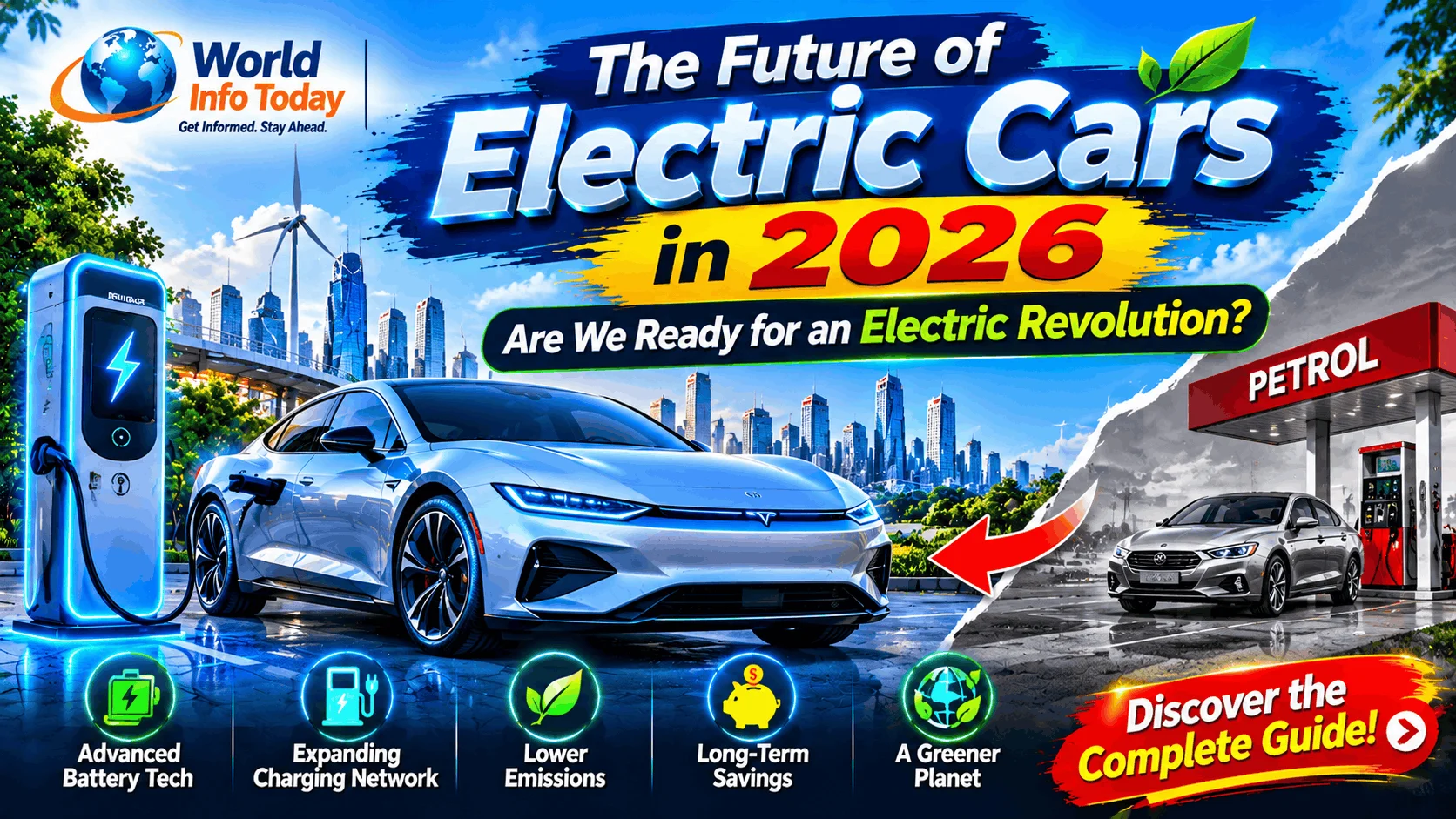
The automotive industry is experiencing one of the biggest transformations in its history. Electric vehicles (EVs) are no longer futuristic concepts or experimental alternatives to traditional automobiles. They have become an important part of the global transportation market, attracting consumers, manufacturers, governments, and technology companies.
In 2026, electric cars are becoming increasingly popular because of improvements in battery technology, expanding charging networks, competitive vehicle prices, and growing environmental awareness. Major automotive brands are investing billions in electric mobility, introducing new models that offer better driving ranges, advanced safety features, and improved performance.
According to the International Energy Agency (IEA), global electric car sales exceeded 20 million in 2025, representing approximately one-quarter of all new cars sold worldwide. This growth demonstrates how quickly consumer preferences and the automotive industry are changing.
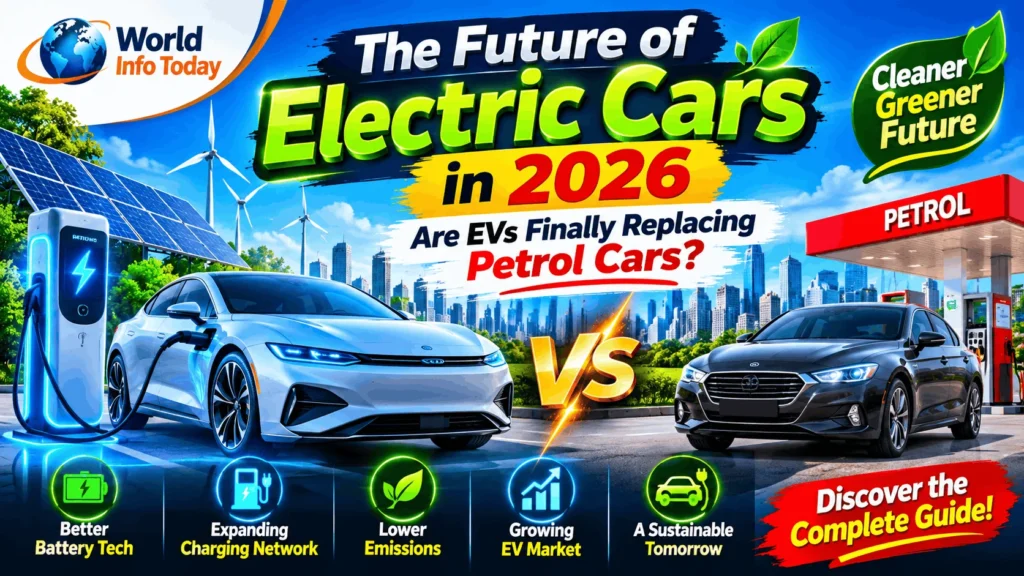
However, an important question remains: Are electric vehicles finally ready to replace petrol-powered cars completely?
The answer is not as simple as it might seem. Although EV adoption is accelerating, affordability, charging infrastructure, battery performance, and regional differences continue to influence how quickly this transition will happen.
In this article, World Info Today explores the future of electric cars in 2026, the latest industry developments, the advantages and challenges of EV ownership, and whether electric vehicles will eventually dominate the global automotive market.
The Current State of the Electric Vehicle Industry in 2026
The electric vehicle market has expanded significantly over the past few years. What once appeared to be a niche automotive segment is now becoming a mainstream transportation option.
Automakers such as Tesla, BYD, Volkswagen, Hyundai, BMW, Mercedes-Benz, and other major manufacturers are expanding their electric vehicle portfolios to meet changing consumer demand.
China remains a major driving force behind this transformation, while Europe continues to strengthen its electric mobility market. Meanwhile, the United States and several emerging economies are experiencing different adoption patterns because of vehicle prices, government policies, and charging availability.
The IEA reported that China accounted for nearly 55% of new car sales being electric in 2025. Europe also experienced significant growth, with electric car sales increasing by more than 30%.
These developments indicate that electric mobility is becoming an important component of the global automotive economy.
Why Are Electric Cars Becoming More Popular?
Several factors are contributing to the increasing demand for electric vehicles:
- Improved battery technology: Modern batteries provide better driving ranges and more efficient energy storage.
- Lower operating expenses: Electric vehicles generally have fewer moving mechanical components and can cost less to maintain.
- Environmental awareness: Consumers are increasingly considering vehicle emissions and environmental sustainability.
- Government policies: Tax benefits, incentives, and emissions regulations encourage electric vehicle adoption in many markets.
- Growing model availability: Manufacturers now offer electric sedans, SUVs, compact cars, and commercial vehicles.
Together, these developments are making electric vehicles a more practical choice for everyday transportation.
Electric Cars vs Petrol Cars: Which Technology Is Better in 2026?
One of the biggest questions for modern car buyers is whether an electric vehicle offers more value than a traditional petrol-powered car.
Both technologies have advantages and disadvantages. The right choice depends on driving habits, budget, geographical location, charging availability, and personal preferences.
1. Running Costs and Maintenance
Electric vehicles can offer lower everyday running costs compared with conventional petrol cars.
An EV uses electricity instead of gasoline, which can reduce energy expenses depending on local electricity and fuel prices. Furthermore, electric motors have fewer moving components than internal combustion engines.
Traditional petrol vehicles require regular engine oil changes, fuel-system maintenance, and other mechanical servicing. Electric cars eliminate several of these maintenance requirements.
However, battery repairs and replacement can be expensive, so buyers should consider warranty coverage and long-term ownership costs.
2. Driving Performance
Electric vehicles are known for their immediate torque delivery, which allows them to accelerate quickly.
Unlike traditional petrol engines, electric motors deliver power without requiring conventional gear changes. This creates a smooth and responsive driving experience.
Petrol cars, on the other hand, still appeal to drivers who prefer familiar engine characteristics, established refuelling networks, and a wide selection of vehicle types.
3. Environmental Impact
Electric cars produce no tailpipe emissions while driving, making them particularly beneficial for reducing pollution in urban areas.
However, their overall environmental impact depends on how electricity is generated, how batteries are manufactured, and how vehicles are recycled at the end of their useful lives.
Petrol vehicles release carbon dioxide and other pollutants through fuel combustion.
When powered by cleaner electricity, battery electric vehicles can offer substantial lifecycle emissions advantages over conventional petrol vehicles.
Major Technological Advancements Shaping the Future of Electric Cars
Technology is one of the most important factors determining the future of electric vehicles. Manufacturers and battery developers are continuously working to improve vehicle efficiency, reduce production costs, and make EV ownership more convenient.
1. Advanced Battery Technology
Battery technology directly affects an electric car’s driving range, charging speed, price, and overall performance.
Lithium-ion batteries currently dominate the electric vehicle industry. However, researchers and manufacturers are exploring new battery chemistries and improved battery designs to increase energy density and reduce manufacturing costs.
Solid-state batteries are among the most discussed emerging technologies. They use solid electrolytes instead of conventional liquid electrolytes and could potentially provide higher energy density, improved safety, and faster charging.
Although commercial development is progressing, widespread mass-market adoption remains dependent on manufacturing costs, durability, and large-scale production.
2. Faster EV Charging Solutions
Charging convenience is another important factor influencing electric vehicle adoption.
Modern fast-charging stations allow compatible vehicles to recharge much faster than conventional home charging systems.
Charging technology is also improving through:
- High-power DC fast chargers.
- More efficient charging connectors.
- Smart charging management systems.
- Home charging stations.
- Improved battery thermal management.
These developments are helping reduce charging inconvenience, particularly for people who frequently travel long distances.
3. Artificial Intelligence and Smart Vehicle Systems
Artificial intelligence is becoming increasingly important in modern electric vehicles.
AI-powered systems can help optimize battery usage, improve energy efficiency, manage navigation, and provide advanced driver-assistance features.
Smart software can also analyze driving patterns and recommend routes based on battery capacity and charging station availability.
As automotive technology develops, software updates and connected vehicle services will become increasingly important parts of the EV ownership experience.
4. Vehicle-to-Grid Technology
Vehicle-to-grid (V2G) technology allows compatible electric vehicles to send stored electricity back to the power grid.
This technology could help balance electricity demand during peak consumption periods and improve the integration of renewable energy sources.
Although widespread implementation requires suitable infrastructure, regulatory support, and compatible vehicles, V2G could make electric cars valuable components of future energy systems.
The Biggest Challenges Preventing Electric Cars from Replacing Petrol Vehicles
Despite considerable progress, electric vehicles still face several challenges that could slow their worldwide adoption.
Understanding these limitations is essential when evaluating the future of electric cars.
1. High Initial Purchase Prices
Affordability remains a significant consideration for many potential EV buyers.
Although battery costs have generally declined, electric vehicles can still carry higher purchase prices than comparable petrol models in certain markets.
Battery production, advanced electronics, and manufacturing investments contribute to overall vehicle costs.
However, increasing competition and the introduction of affordable electric models are gradually improving consumer choices.
2. Limited Charging Infrastructure
Charging infrastructure remains unevenly distributed across different countries and regions.
Major cities generally have better access to public charging stations, while rural areas and smaller communities may have limited facilities.
Drivers who live in apartments without dedicated parking spaces can also experience difficulties installing private home chargers.
Expanding reliable charging networks will therefore be essential to making electric vehicles accessible to more consumers.
3. Battery Degradation and Replacement Costs
Like other rechargeable batteries, EV batteries gradually lose capacity over time.
Battery degradation depends on several factors, including temperature, charging habits, battery chemistry, and vehicle usage.
Modern battery management systems help protect battery health, but consumers still have concerns about long-term performance and replacement expenses.
Manufacturers can address these concerns through stronger battery warranties, improved thermal management, and better recycling technologies.
4. Electricity Availability and Renewable Energy
Electric vehicles increase electricity demand, particularly when adoption grows across large cities and transportation networks.
Countries with limited electricity generation capacity or unreliable power distribution may struggle to support rapid EV expansion.
Renewable energy sources such as solar, wind, and hydropower can help make electric transportation more sustainable.
However, building the necessary generation capacity, transmission networks, and charging infrastructure requires significant investment.
Which Countries Are Leading the Electric Vehicle Revolution?
Electric vehicle adoption is not happening at the same speed everywhere. Economic conditions, government policies, manufacturing capacity, and consumer demand influence the development of individual markets.
China: The World’s Largest EV Market
China continues to lead the global electric vehicle industry.
Its competitive manufacturing ecosystem, battery production capacity, and wide range of affordable electric models have helped accelerate adoption.
Brands such as BYD and other domestic manufacturers are expanding internationally, increasing competition in global automotive markets.
China’s experience demonstrates how manufacturing scale and competitive pricing can accelerate the transition toward electric mobility.
Europe: Accelerating the Transition
European countries are encouraging electric mobility through emissions regulations, infrastructure development, and various national incentive programmes.
Norway is one of the strongest examples of successful electric vehicle adoption, with electric cars accounting for approximately 97% of new car sales in 2025, according to the IEA.
Germany, France, the United Kingdom, and other European markets are also important contributors to the region’s electric vehicle industry.
United States: Innovation and Market Competition
The United States remains an important market for electric vehicle technology.
Companies such as Tesla and established automotive manufacturers are investing in battery development, electric vehicle platforms, and charging networks.
However, changing government incentives, vehicle prices, and consumer preferences can influence the speed of EV adoption.
Emerging Markets: New Opportunities for Electric Mobility
Countries across Asia, Latin America, and the Middle East are becoming increasingly important to the electric vehicle industry.
More affordable imports, expanding vehicle availability, and growing interest in sustainable transportation are creating opportunities for market growth.
However, electricity reliability, import duties, charging infrastructure, and purchasing power will remain important considerations.
What Is the Future of Electric Cars in the Next Five to Ten Years?
The next decade could bring significant changes to the global automotive industry.
Electric vehicles are expected to become more competitive as battery manufacturing improves, production scales increase, and more manufacturers introduce affordable models.
According to BloombergNEF’s 2026 Electric Vehicle Outlook, global passenger electric vehicle sales are expected to exceed 23 million in 2026.
Several important developments could shape the next stage of electric mobility.
More Affordable Electric Vehicles
Manufacturers are increasingly focusing on affordable electric cars designed for everyday consumers.
Smaller batteries, efficient vehicle platforms, improved manufacturing processes, and competitive international markets could make EVs accessible to a wider audience.
Longer Driving Ranges
Battery improvements may allow future electric vehicles to travel longer distances on a single charge.
Higher energy density and more efficient power management could reduce range concerns, especially for drivers who regularly travel between cities.
Expansion of Charging Networks
Public and private investment in charging infrastructure will be essential for supporting the growing number of electric vehicles.
More charging stations along highways, in residential communities, and at commercial locations could make EV ownership significantly more convenient.
Increased Use of Renewable Energy
As electricity generation becomes cleaner, electric vehicles could offer even greater environmental benefits.
Solar-powered charging facilities, smart electricity grids, and energy storage systems may help create a more sustainable transportation ecosystem.
Greater Competition Among Automakers
Competition between established manufacturers and new EV-focused companies will likely increase.
This competition could encourage better vehicle designs, improved battery performance, more advanced technology, and competitive pricing.
Will Electric Cars Completely Replace Petrol Cars?
Electric vehicles are likely to become a dominant part of future transportation, but completely replacing petrol-powered cars will take considerable time.
The transition depends on several factors, including infrastructure development, battery affordability, government regulations, consumer demand, and regional economic conditions.
In countries with strong charging networks and supportive policies, electric cars may become the preferred option for most new vehicle buyers.
However, petrol-powered vehicles may remain relevant in regions where charging facilities are limited or where electricity access is unreliable.
Hybrid and plug-in hybrid vehicles may also continue serving as transitional technologies for consumers who want improved fuel efficiency without relying entirely on charging infrastructure.
Another important consideration is the existing vehicle fleet. Even if most new cars eventually become electric, millions of petrol-powered vehicles will remain on roads for years because consumers do not replace their cars immediately.
Therefore, the future is more likely to involve a gradual transition rather than an immediate replacement of all petrol vehicles.
Is Buying an Electric Car Worth It in 2026?
For many consumers, purchasing an electric car in 2026 can be a practical decision, particularly when home charging is available and daily driving distances are predictable.
However, potential buyers should evaluate more than the advertised purchase price.
Important factors to consider include:
- Driving range: Choose a vehicle that comfortably covers your regular travel requirements.
- Charging availability: Check access to home, workplace, and public charging stations.
- Total ownership costs: Compare electricity expenses, insurance, maintenance, and depreciation.
- Battery warranty: Understand the manufacturer’s battery coverage and warranty conditions.
- Resale value: Research the expected resale demand for your selected model.
- Local electricity supply: Consider whether your area has reliable and affordable electricity.
An electric vehicle may be particularly suitable for daily commuters, urban drivers, and households with access to convenient charging.
For people who frequently travel through areas without charging facilities, a petrol vehicle or hybrid may still be a more convenient option.
Final Thoughts: The Future of Electric Cars Is Closer Than Ever
The future of electric cars in 2026 looks promising, but the transition away from petrol-powered vehicles is still developing.
Improvements in battery technology, increasing competition, affordable vehicle models, and expanding charging infrastructure are making electric mobility more practical than ever.
Global sales figures also demonstrate that electric vehicles are no longer a small automotive experiment. They are becoming a major part of the transportation industry.
Nevertheless, challenges involving affordability, charging access, battery production, and electricity infrastructure must be addressed before EVs can become accessible to everyone.
For consumers, the best decision depends on individual driving needs, local infrastructure, and long-term ownership costs.
One thing is clear: electric vehicles are not simply the future of the automotive industry; they are already transforming how the world thinks about transportation.
Frequently Asked Questions (FAQs)
1. Will electric cars replace petrol cars completely?
Electric cars are expected to become increasingly common, but completely replacing petrol vehicles will take many years. Charging infrastructure, battery costs, electricity availability, and consumer preferences will influence the transition.
2. Are electric cars worth buying in 2026?
Electric cars can be worth buying in 2026 for consumers who have access to convenient charging and want potentially lower running and maintenance costs. However, purchase prices, insurance, battery warranties, and driving requirements should be considered before making a decision.
3. How long do electric car batteries last?
Electric car battery lifespan varies depending on battery chemistry, temperature, driving conditions, and charging habits. Many manufacturers offer battery warranties of around eight years, although actual coverage differs by brand, model, and market.
4. What are the biggest disadvantages of electric vehicles?
Some major disadvantages include higher initial purchase prices in certain markets, limited charging infrastructure in some regions, longer refuelling times compared with petrol cars, and potential battery replacement expenses.
5. What is the future of electric cars?
The future of electric cars will likely involve more affordable models, improved battery technology, faster charging, better energy efficiency, and wider adoption of sustainable transportation. Electric vehicles are expected to capture a growing share of the global automotive market as technology and infrastructure continue to improve.